The Great Pearl
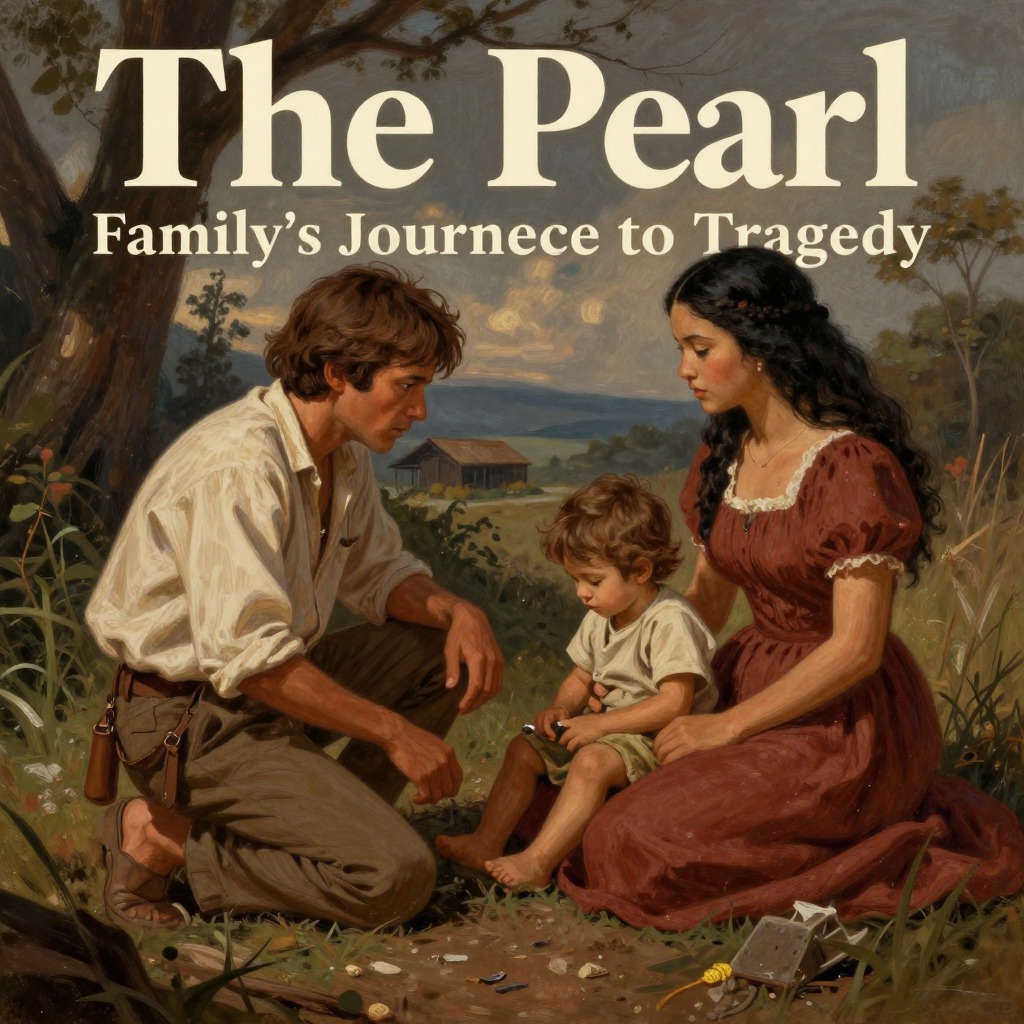
The Great Pearl is the central object of John Steinbeck's novella The Pearl, a magnificent and enormous pearl discovered by the poor fisherman Kino. It initially appears as a miraculous stroke of luck that promises to transform his family's life, but it rapidly becomes a catalyst for greed, violence, and tragedy, ultimately revealing itself as a destructive force that corrupts its owner and brings about the death of his infant son, Coyotito.
Discovery and Initial Wonder
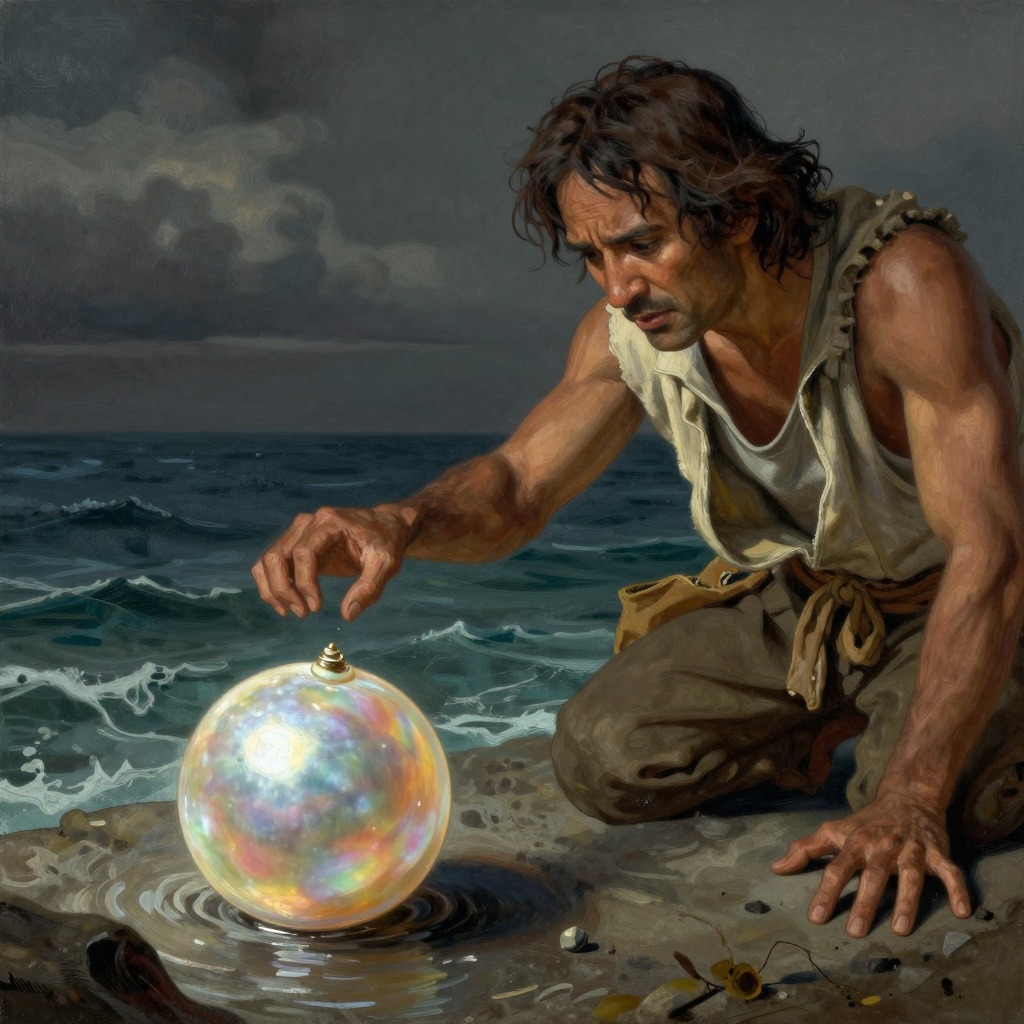
Kino finds the pearl while diving for oysters on the sea bed of the Gulf of California. He spots a very large oyster lying by itself under a little overhang, and in its lip-like muscle he sees a ghostly gleam. When he opens it, the pearl lies within, "perfect as the moon," capturing light and giving it back "in silver incandescence." It is as large as a sea-gull's egg, and Kino immediately knows it is "the greatest pearl in the world." The discovery coincides with the swelling from Coyotito's scorpion sting beginning to recede, making the pearl seem like a divine answer to Juana's prayers. Kino's emotional reaction is overwhelming: he puts back his head and howls, his body rigid with ecstasy. The news spreads through the town like a physical force, and the pearl is instantly named "the Pearl of the World."
The Pearl as a Vessel of Dreams
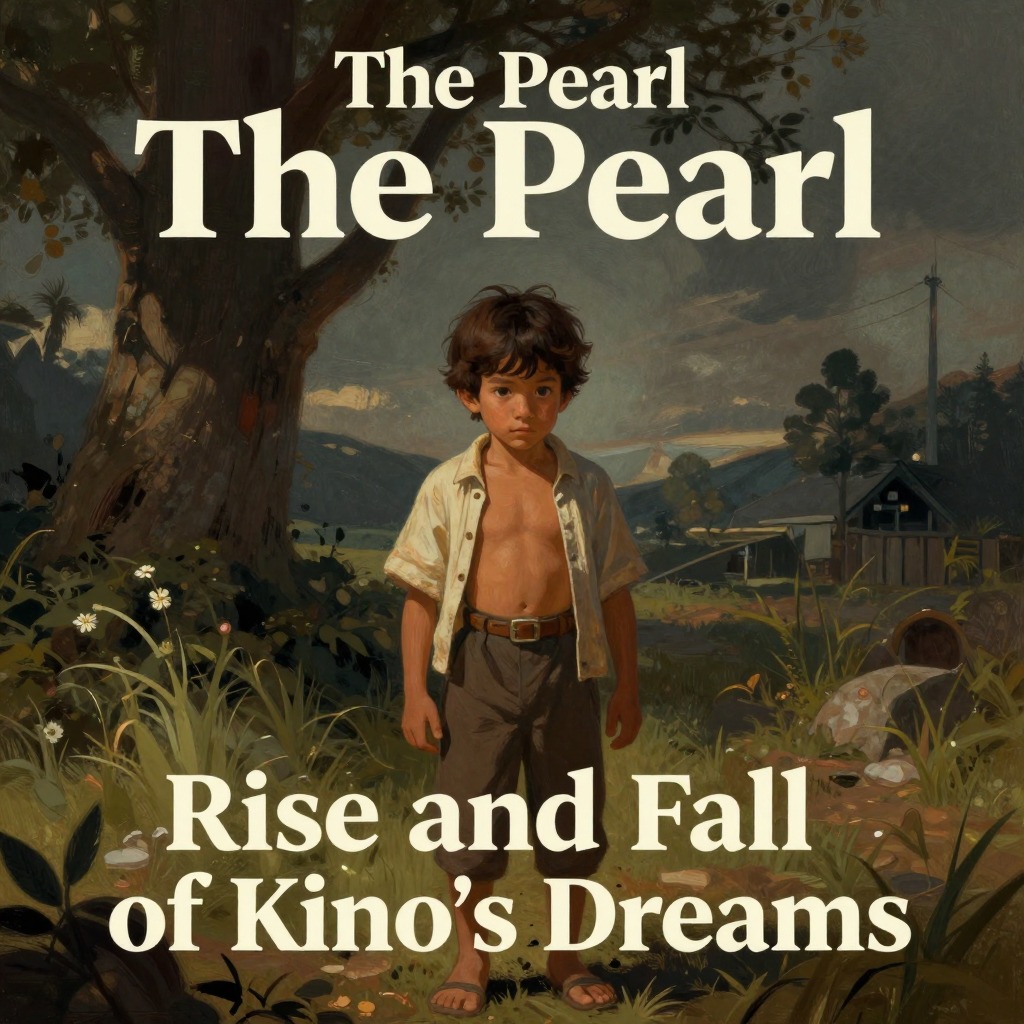
The pearl becomes a tangible repository for Kino's most ambitious dreams. Gazing into its lucent surface, he sees a series of visions: himself, Juana, and Coyotito being married in the church; his family dressed in new clothes, with Coyotito in a blue sailor suit from the United States; a new harpoon; and, most audaciously, a rifle—a Winchester carbine. The rifle breaks down the barriers of what Kino considers possible, and he declares that his son will go to school, learn to read and write, and make numbers. "These things will make us free," Kino proclaims, seeing himself and Juana by the fire while Coyotito reads from a great book. The pearl's music merges with the Song of the Family, and for a time, the two melodies beautify one another, representing a perfect union of hope and domestic love.
The Pearl as a Source of Evil
Almost from the moment of its discovery, the pearl attracts a dark, predatory attention. The doctor, who had refused to treat Coyotito, comes to the brush house under the pretense of helping the baby, but his real motive is to locate the pearl. The priest visits, his thoughts turning to church repairs. The pearl buyers, who operate as a collusive syndicate, prepare to offer Kino a fraction of its value. The town itself begins to manufacture a "black distillate" of envy and greed, and Kino becomes "curiously every man's enemy." Juana is the first to name the pearl's true nature, crying out, "This pearl is like a sin! It will destroy us." She attempts to throw it back into the sea, but Kino intercepts her, striking her in the face and kicking her. The pearl's music in his head becomes interwoven with the Song of Evil, and he confesses to his brother, "This pearl has become my soul. If I give it up I shall lose my soul."
The Pearl's Transformation and Final Rejection
As Kino's world collapses around him—his canoe is destroyed, his house is burned, and he kills a man in self-defense—the pearl's appearance in his visions changes. When he looks into it to find his rifle, he sees instead a huddled dark body with shining blood dripping from its throat. He sees Juana with her beaten face crawling home, and Coyotito's face thick and feverish from the doctor's medicine. After he kills the three trackers who have pursued his family into the mountains, he hears the keening cry of death from the cave where Juana and Coyotito were hiding. Returning to La Paz with Coyotito's body, Kino looks into the pearl one last time. Its surface is now "gray and ulcerous." He sees evil faces, the light of burning, the frantic eyes of the man in the pool, and finally Coyotito lying in the little cave with the top of his head shot away. The pearl is ugly, like a malignant growth, and its music is distorted and insane. Kino offers the pearl to Juana, but she refuses, saying simply, "No, you." He then draws back his arm and flings the pearl with all his might into the sea. It settles to the sand bottom, a crab raises a little cloud of sand over it, and the pearl is gone. The music of the pearl drifts to a whisper and disappears.